
Security deposit protection

A deposit
That's Still There at Checkout

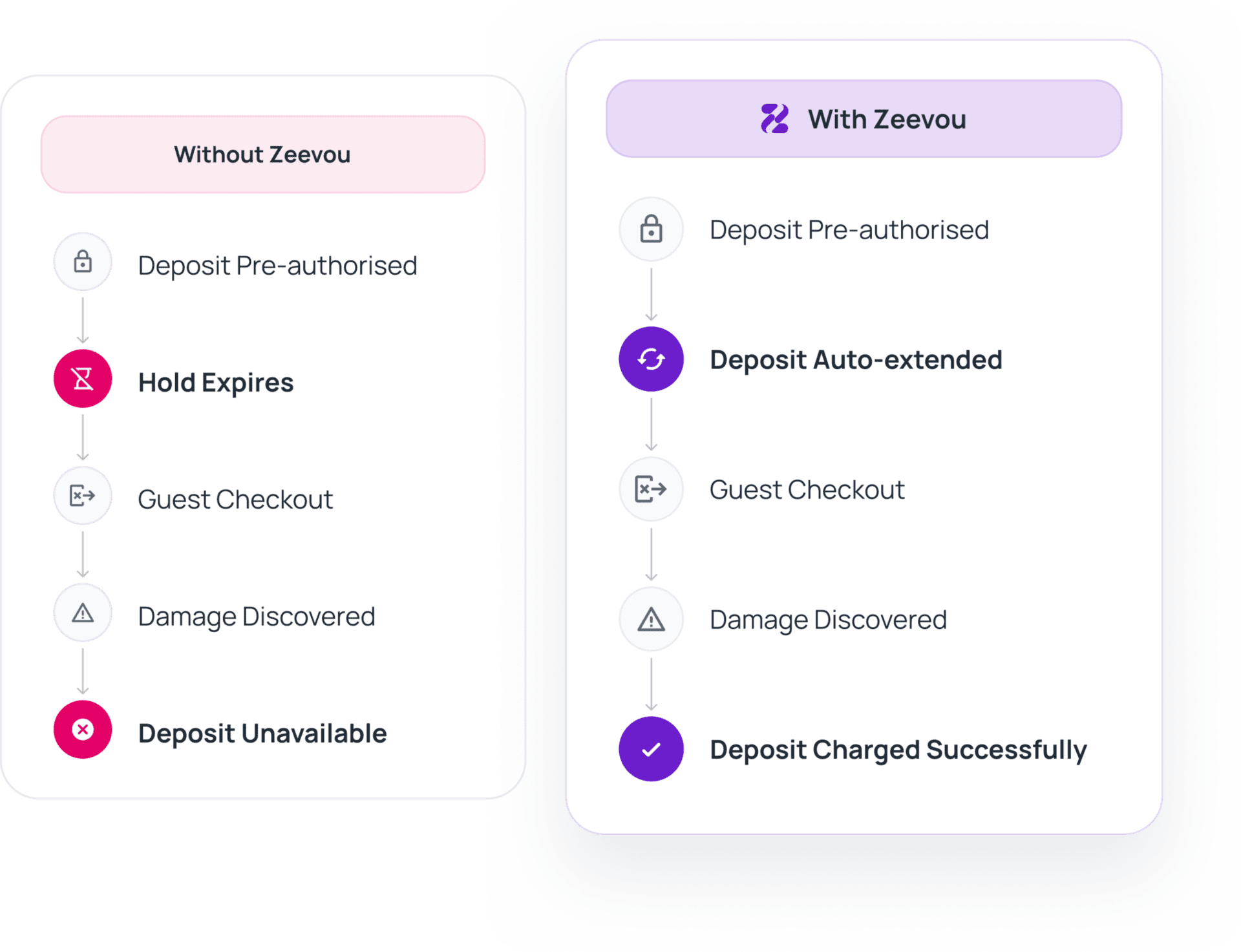
Card holds can expire before a booking ends. Zeevou automatically keeps the funds until your specified release timeline, so you can ensure you are never out of pocket due to not being able to charge the deposit on a booking post departure when you find out that damage was caused or house rules were broken.

Get Started Free

No credit card needed

SD herosection zv image

28,662

deposit managed in the past 12 months

7,551

security deposits kept covered beyond the card-authorisation limit

501

ever needed charging

£95,244

recovered by hosts from 501 deposit charges

SD painpoint section

The hold expires. Nobody notices.

You manage 40 units. A guest checks in for 21 nights and pre-authorises a deposit.

The hold covers the first 7 days.

Your cleaner reports damage at checkout — and the authorisation you were relying on died two weeks ago.

When manual stops working

When does checking deposit holds by hand stop working?

Manual checks are fine on a small portfolio. As volume grows, confirming that every hold is authorised, still valid, and aligned to the latest checkout date stops being something one person can hold in their head.
security deposite status zv image

THE ZEEVOU WORKFLOW

Keep the security deposit covered throughout the stay

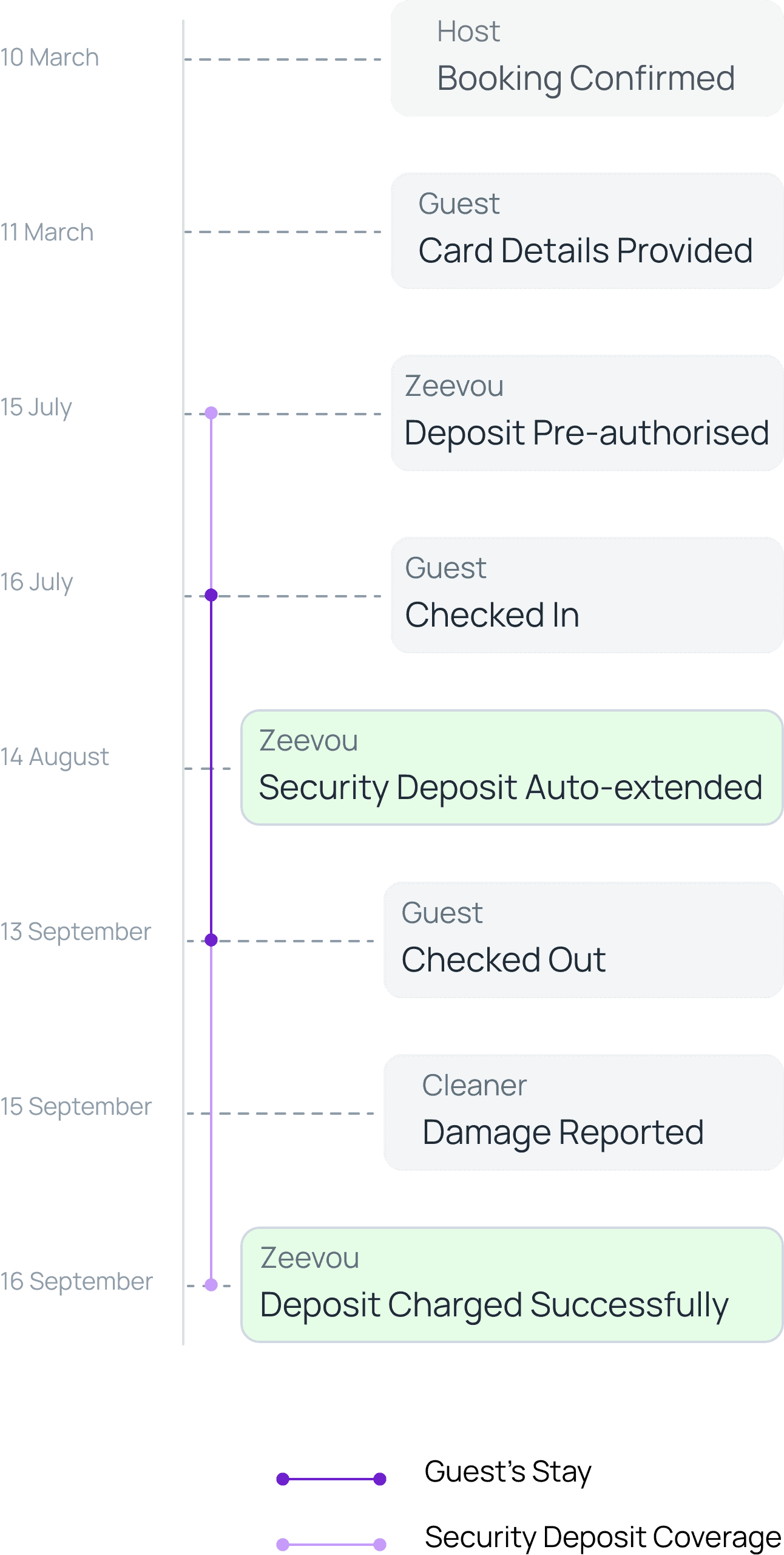
Zeevou applies each property's deposit rules at online check-in and monitors the hold through to checkout. As a hold approaches expiry, Zeevou re-authorises it.

If a re-authorisation fails, the booking is flagged so your team can act before the guest leaves.

security deposit timeline updated2 security deposit timeline updated mobile

Booking confirmed

A link is automatically sent to the guest to complete the pre-checkin form.

connect

Security Deposit Timeline Starts

Zeevou pre-authorises the deposit based on your selected timeline ahead of the guest’s arrival and flags any failures.

connect

Deposit is Automatically Extended

Zeevou automatically re-authorises it, or flags the booking if the card declines.

connect

Guest checks out

Your housekeeper inspects the property and reports any damages through Zeevou’s mobile app.

connect

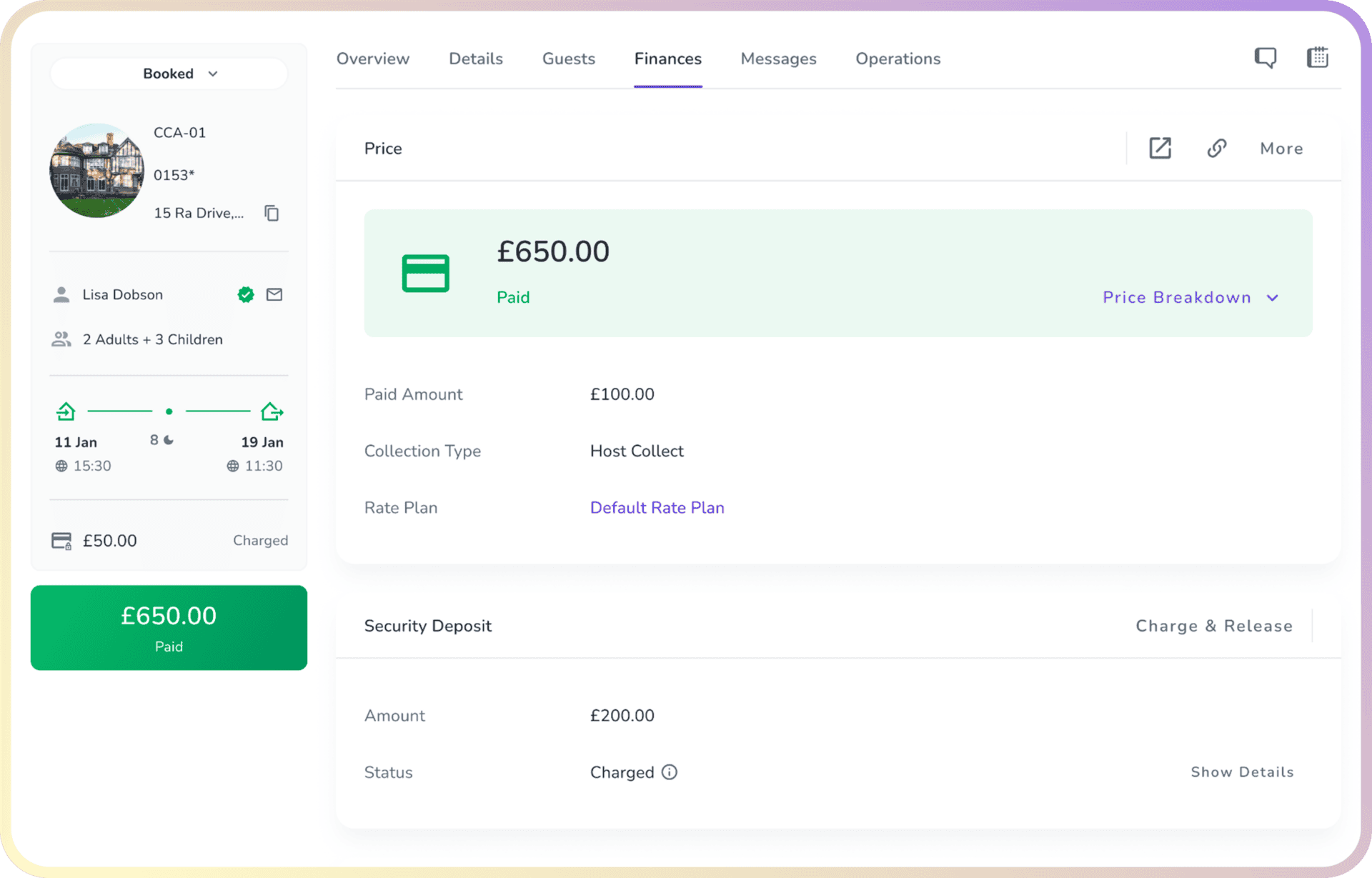
Security Deposit Available to Charge

Charge the deposit and record the amount, the reason and supporting evidence as necessary.

Two ways to hold a deposit

Same protection, different trade-offs. Choose per property.

Auto Re-authorisation

Best for: guest experience.

The hold stays a hold. No money moves and there's nothing to refund, which is what most guests prefer. Zeevou extends it automatically and flags any failure.

Auto-Charge / Auto-Refund

Best for: certainty.

Funds are captured before check-in and held until you release them after checkout. No expiry risk at all. The guest is genuinely out of pocket during the stay, and you're responsible for refunding promptly.

What this takes off your team's checklist

deposit requirements

Checking deposit requirements are cleared before check-in

Monitoring expiry dates

Monitoring expiry dates on longer stays and re-authorising by hand

Following up on failed authorisations

Chasing failed authorisations

Evidencing deposit charged

Evidencing why a deposit was charged if a guest disputes it

A 42-unit serviced accommodation operator has run this workflow since March 2021. Across 3,122 deposits they've held £430,926 in cover, charged 122, and recovered £19,050 they'd otherwise have written off.

How security-deposit pre-authorisations work

A pre-authorisation, a captured payment and a deposit record are not the same thing. Here is what each stage means and how Zeevou handles it.

What is a security-deposit pre-authorisation?

A pre-authorisation places a temporary hold on the guest’s card for the security-deposit amount. The money is not taken as a payment, but the authorised amount can be charged later when there is a valid reason.

With Zeevou, the guest pre-authorises their card during online check-in, based on the deposit rules you have set for the property.

Why do card holds expire?

Card authorisations remain valid for a limited period set by the payment provider and card network.For Stripe payments, a card authorisation is generally limited to around seven days.

Zeevou monitors the hold and automatically re-authorises the deposit before the current authorisation expires.

What happens when a booking is extended?

Extending a booking changes the checkout date, but it does not necessarily extend the original card authorisation.

Zeevou re-authorises the deposit before the existing hold expires, helping the additional nights remain covered without your team having to renew the hold manually.

What happens when the stay is longer than the original authorisation?

For security deposits processed through Stripe, Zeevou offers two ways to keep the deposit covered:

Automatic re-authorisation: Zeevou automatically renews the authorisation before the original hold expires, helping the property remain covered without someone having to remember to take action.

Auto Charge/Auto Refund: Instead of relying on a temporary card hold, Zeevou captures the deposit as an actual payment and automatically refunds all or part of it after the stay, according to the configured security-deposit timeline.

What happens when an authorisation fails?

If the card fails to authorise, no valid hold is created.

Zeevou automatically sends the guest a 3-D Secure link, while check-in instructions remain locked until the security-deposit requirement is cleared.

What is the difference between a pre-authorisation, a captured payment and a recorded deposit?

A pre-authorisation temporarily reserves an amount on the guest’s card without charging it.

A captured payment takes all or part of the authorised amount from the card.

A recorded deposit shows that a deposit was logged against the booking. It does not prove that the funds remain authorised and available.

Zeevou monitors the authorisation itself, so the workflow is based on whether a valid hold is in place, not simply whether a deposit has been recorded.

What happens at checkout?

If no charge is required, Zeevou can automatically release the deposit. If there is a valid reason to charge, the relevant amount can be collected, with the charge, amount and supporting evidence recorded against the booking.

Which payment processors does this work with?

Security-deposit pre-authorisations are processed through Stripe. The card hold, the automatic re-authorisation, the release and any charge against the hold all run on Stripe. Deposits taken by other means — bank transfer, card machine or cash — can be recorded against the booking so the record stays in one place. These are recorded rather than held, so they are not automatically re-authorised, released or charged.

Is this included or an add-on?

Security deposits are part of Zeevou’s online check-in workflow. Which plan you need depends on the rest of your setup — you can start free and we will confirm what your configuration requires.

Stop chasing deposit holds one booking at a time

Create your free Zeevou account and manage bookings, online check-in and deposit requirements in one workflow.

Get Started Free

No credit card needed

Scroll to Top
Solution lamp for mobile header

Custom Solutions with Zeevou

Discover tailored solutions perfectly suited to your role, business size, and specific use cases.