
Quick answer: Most Airbnb hosts on the current simplified pricing model pay a 15.5% host-only service fee, taken directly from the payout before it reaches your account. Under the older split-fee model, hosts paid roughly 3% while guests paid a separate fee at checkout. The exact rate still varies by listing, market and commercial agreement, so it’s worth checking your own transaction history rather than assuming a flat number applies. The rest of this guide walks through what changed, how to work out your real payout, and how to keep your margins healthy either way.
Airbnb’s pricing model has shifted a lot over the past few years, and plenty of hosts are still catching up with what it means for their bottom line.
If your payouts look smaller than they used to, you’re not imagining it. Many hosts have had to rethink their pricing as fee structures changed and operating costs kept climbing.
The good news: a higher platform fee doesn’t automatically mean lower profit. Once you understand how the fee is calculated, you can price around it.
Table of Contents
What Are Airbnb Host Fees?
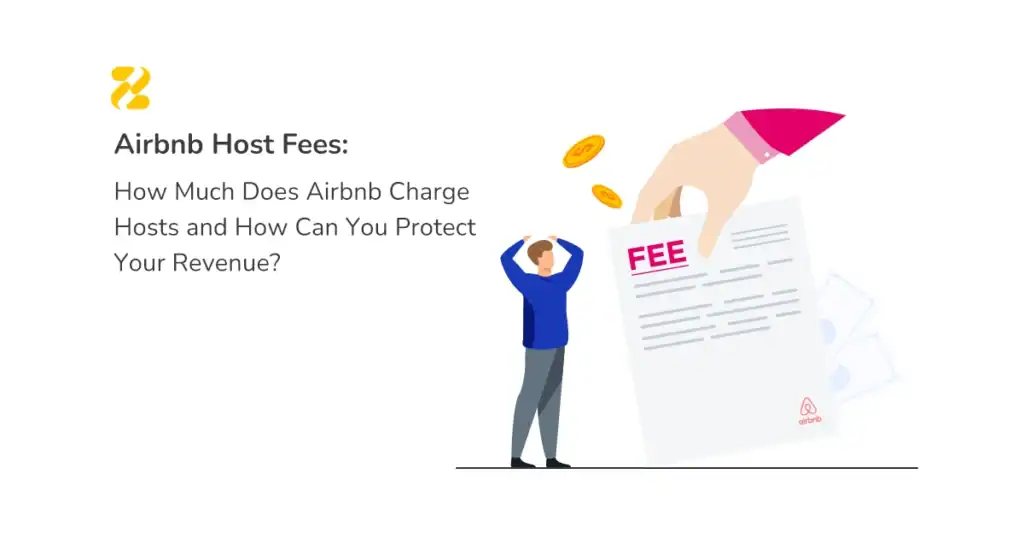
Airbnb host fees are the service fees the platform deducts from a booking before your payout lands. They cover payment processing, customer support, fraud prevention, and the marketing that brings guests to your listing in the first place.
Airbnb has used two different pricing models over the years.
Under the split-fee model, hosts paid a fee of around 3%, while guests paid a separate service fee on top at checkout. The host fee stayed low, but the guest often saw a noticeably higher final price.
Under simplified pricing, which now applies to most professional hosts, there’s just one fee: 15.5%, deducted straight from the host’s payout. Guests see one clean price with nothing added later. Airbnb explains the reasoning behind this in its own service fee guidance — the goal is a more transparent checkout for guests.
If you haven’t touched your nightly rates since your account moved to host-only pricing, there’s a good chance your margins have quietly shrunk.

Why Did Airbnb Change the Fee Structure?
Airbnb didn’t switch models to charge hosts more overall, it switched to make prices easier for guests to compare.
Under the split-fee model, a guest might click into a listing expecting one price, only to see a higher total once Airbnb’s fee got added at checkout. That created friction, and it made price comparisons across listings harder.
With host-only pricing, the number the guest sees is the number they pay. Airbnb takes its cut from your side afterward.
The trade-off is on you: you now carry the full weight of the fee, so pricing accuracy matters more than it used to.
How Much Does Airbnb Actually Charge Hosts?
For most hosts on simplified pricing, the answer is 15.5% of the booking subtotal.
But that figure isn’t universal. Airbnb has said fees can vary by listing type, country, connected software, and individual commercial agreements. Two hosts in the same city can legitimately be on different rates.
Rather than assuming 15.5% applies to every booking you take, it’s worth pulling your own payout history and checking the fee line item directly.
| Previous Split-Fee Model | Simplified Pricing Model | |
| Host Service Fee | ~3% | Typically 15.5%* |
| Guest Service Fee | Yes, shown at checkout | Built into the displayed price |
| Guest-Facing Price | Lower base price, fee added later | One transparent total |
| Host’s Pricing Responsibility | Lower | Higher |
*Rates vary by listing, market, and agreement – always confirm against your own account.
What Does That Mean for Your Payout?
Understanding the fee percentage is one thing. Seeing what it does to real money is another.
Take a £100-a-night booking. Under the old split-fee model, a host would typically net around £97 before tax. Under host-only pricing at 15.5%, that same £100 booking nets closer to £84.50.
The overall fee Airbnb collects hasn’t changed much, what changed is that it’s no longer split with the guest. That shift alone is enough to quietly erode a host’s margin if pricing doesn’t catch up.
How to Calculate Your Real Airbnb Payout
Once you know your fee percentage, the payout math is simple:
Estimated Payout = Nightly Rate × (1 − Host Fee)
At the standard 15.5% rate, that’s:
Nightly Rate × 0.845
Discounts, taxes, currency conversion and promotions can all shift the final number slightly, but this gets you close.
| Nightly Rate | Fee (15.5%) | Estimated Payout |
| £75 | £11.63 | £63.37 |
| £100 | £15.50 | £84.50 |
| £150 | £23.25 | £126.75 |
| £200 | £31.00 | £169.00 |
| £300 | £46.50 | £253.50 |
The number that actually matters isn’t the fee, it’s whether your current rate still delivers the profit you need once that fee, and every other running cost, comes out.

Should You Just Raise Your Prices?
It’s tempting to add 15.5% straight onto every listing and call it done. In practice, that rarely works cleanly — push your price too far above the market and you lose bookings, which can leave you worse off than before.
A more useful starting question: how much do you actually want to earn per booking?
Work backwards from that number. If you want a £100 net payout at a 15.5% fee, you’d need to list at roughly:
£100 ÷ 0.845 = £118.34
That figure is a benchmark, not a finished pricing strategy. Weigh it against:
- Seasonal demand
- Local events
- Occupancy trends
- Your average daily rate (ADR)
- What comparable local listings are charging — tools like AirDNA’s Rentalizer can give a quick read on nearby comps
- Booking lead time
- What your specific guest segment expects to pay
Fee percentage is one input into pricing, not the whole formula.
Common Pricing Mistakes After the Fee Change
Some hosts reacted by bumping prices immediately across the board. Others left rates untouched and quietly absorbed the loss. Neither is automatically right.
The recurring mistakes are pretty consistent: raising prices without checking local demand first, copying a competitor’s rate without knowing their cost base, and reviewing pricing once or twice a year instead of monthly.
There’s also a subtler one — fixating on Airbnb’s cut while ignoring the rest of the cost stack. A small rise in cleaning or utility costs can dent your margin more than the platform fee ever did.
Why Regular Pricing Reviews Matter More Now
Demand shifts constantly by season, by local events, by what new competitors are doing nearby. A rate that worked in March can quietly underperform by August.
Property managers who review pricing monthly, rather than annually, tend to catch these shifts before they cost real money.
That gets harder as a portfolio grows. Manually updating rates across a dozen listings and half a dozen channels is a good way to lose an afternoon — and to make mistakes.
This is where a channel manager earns its keep: push a rate change once, and it syncs everywhere automatically instead of needing to be re-entered listing by listing.
Zeevou combines that channel sync with a property management system and a direct booking website in one place, so pricing stays consistent across every channel without the manual re-entry.
Look Beyond the Headline Fee
Airbnb’s 15.5% gets most of the attention, but it’s rarely the biggest line item in a rental business.
Cleaning, maintenance, insurance, linen, guest supplies, and payment processing all chip away at margin too. Fixating on the platform fee alone gives a distorted picture of what a booking actually earns.
A more useful question than “how much does Airbnb take?” is “what’s left after every cost has come out?”

Increasing Revenue Without Touching Your Prices
Raising rates isn’t the only lever. Sometimes the operational side moves the needle more.
Tightening gaps between reservations lifts occupancy without changing a single price. Encouraging longer stays spreads your cleaning cost across more nights. Faster, more consistent guest communication tends to translate into better reviews and repeat bookings.
Automation plays a real role here too. Manually sending check-in instructions, chasing housekeeping schedules, and answering the same guest questions on repeat easily eats several hours a week — time that’s better spent on things that actually grow revenue. An automated online check-in flow, for instance, removes most of that back-and-forth before a guest even arrives.
Managing Airbnb Alongside Other Channels
Once you’re listed on more than one platform, manually keeping calendars and rates aligned becomes a liability — a missed update is how double bookings happen.
A channel manager solves the sync problem. A property management system solves the bigger one: bringing reservations, guest messaging, housekeeping, and financial reporting into a single view instead of five different logins.
Zeevou brings the PMS, channel manager and a commission-free booking engine together, so a rate or availability change made once shows up correctly everywhere, including your own direct site, without extra admin.
Track Revenue, Not Just Fees
It’s easy to get anchored on the fee percentage, especially right after a change like this one. Experienced operators tend to watch a wider set of numbers instead.
| Metric | Why It Matters |
| Occupancy Rate | How effectively the property is converting availability into bookings |
| Average Daily Rate (ADR) | What you’re actually earning per booked night |
| Revenue per Available Night | Occupancy and rate combined into one performance number |
| Average Length of Stay | Longer stays mean fewer cleans and less turnover cost |
| Net Profit | What’s left after Airbnb’s fee and every operating cost |
Taken together, these tell you far more about the health of the business than the commission line alone.
Frequently Asked Questions
How much does Airbnb charge hosts?
Most hosts on simplified pricing pay 15.5% of the booking subtotal. The exact figure can shift depending on location, account type, and any software integrations connected to the listing, so it’s worth checking your own payout breakdown rather than assuming the standard rate applies.
Why did Airbnb increase host fees?
Technically, it didn’t increase the total take so much as restructure who pays it. Under the old split-fee model, hosts paid around 3% and guests paid a separate fee at checkout. Under host-only pricing, that guest-side cost hasn’t disappeared — it’s just been folded into the host’s payout instead. Airbnb calls this a transparency improvement, and for guests comparing listings, it genuinely is one. For hosts, it means absorbing a cost that used to be shared.
How does the fee affect my actual payout?
Take the booking subtotal, subtract the applicable fee, and that’s roughly what lands in your account before tax. At 15.5%, a £100 booking nets about £84.50. Discounts, promotions and currency conversion can move that figure slightly.
Can I avoid Airbnb’s service fee?
Not on bookings made through Airbnb — the fee applies to every reservation on the platform. What you can control is how much of your business depends on it. Many hosts use Airbnb to bring in first-time guests, then move repeat guests toward a commission-free direct booking site, which keeps the guest-acquisition benefit of Airbnb without paying its fee on every return visit.
Is Airbnb still worth it despite the fee?
That depends on what you’re comparing it to. As a source of new guests, Airbnb is hard to beat — few channels put a listing in front of that much demand. As a channel to keep booking the same guest over and over at 15.5% a time, it’s a lot less efficient. Most hosts do best treating Airbnb as where guests find them first, and their own direct booking site as where loyal guests come back.
Conclusion
Airbnb’s fee structure has changed, and it’s not changing back. What matters now is whether your pricing has caught up.
Regular rate reviews, a clear-eyed view of your full cost stack — not just Airbnb’s cut — and a plan to reduce dependence on any single platform will do more for your margins over time than reacting to any one fee announcement. Anyone renting out UK property should also keep an eye on HMRC’s current guidance on how holiday letting income is taxed, since the old furnished-holiday-let tax rules no longer apply and letting income is now taxed the same way as other property income.
As a portfolio grows, the admin side becomes the real bottleneck — not the fee percentage. That’s usually the point where hosts move pricing, guest communication and availability into a single property management system rather than juggling spreadsheets and separate logins. Zeevou pairs that PMS with a channel manager and a free, commission-free direct booking website, so the operational load drops even as the portfolio grows.
Airbnb isn’t going anywhere, and neither is its fee. But it’s one channel, not the whole strategy. The businesses that come out ahead are the ones that pair it with tighter pricing, a real direct-booking channel, and less manual overhead behind the scenes.
Image by pch.vector on Magnific.