
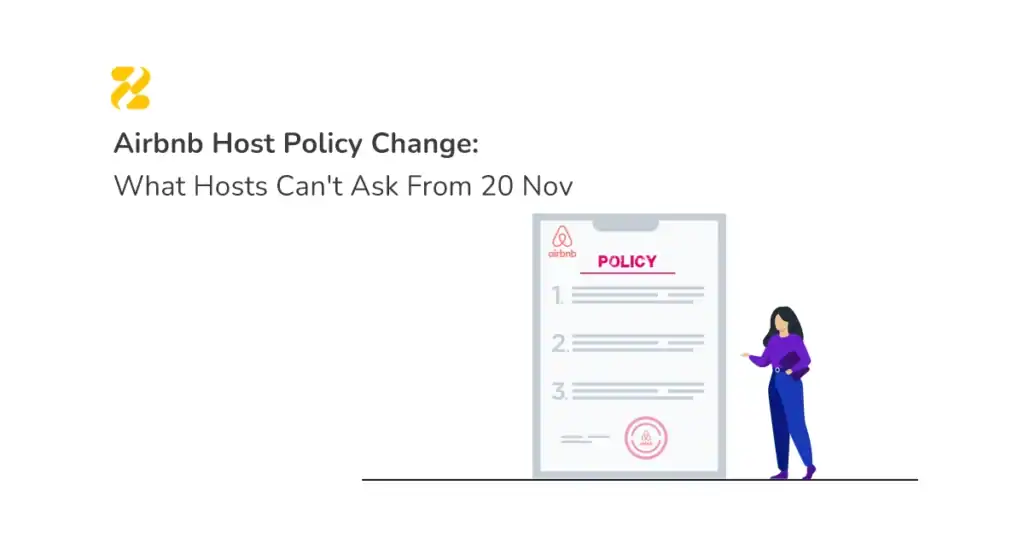
Quick Answer: Airbnb’s new host policy, “Limiting host-imposed contracts and other requirements”, applies to reservations booked on or after 20 November 2026. It generally stops hosts requiring separate contracts, collecting guest personal data, keeping copies of guest ID, or requiring a third-party app or separate registration to get in. House rules are not banned. Hosts can still set them within Airbnb’s 7 standard rules plus “reasonable requests”.
- Effective date (both policies): reservations booked on or after 20 November 2026. For the contracts policy, earlier bookings follow the previous Off-Platform Policy.
- Policy names: “Limiting host-imposed contracts and other requirements” and “Reasonable house rules and requests”.
- Still allowed: checking ID in person at check-in if disclosed in the listing; keyless entry if guests are offered another way in on request.
- Checkout chores: hosts generally can’t ask guests to do tasks that take significant effort or that a cleaner would normally do, such as stripping beds, taking rubbish offsite, or washing and putting away dishes.
- Contract exceptions: legal requirements, community association rules, stays of 28 nights or more, optional amenities, and Luxe listings.
- Data and registration exceptions: where necessary to comply with the law or a documented community association rule, or to sign an allowed contract.
- Enforcement, contracts policy: education, warnings, listing suspension or removal, and account removal for repeat offences.
- Enforcement, house rules policy: education, warnings, a notice on the listing, reduced search visibility, or other action under Airbnb’s Terms of Service. Hosts also can’t impose fines or penalties on guests.
Table of Contents
What Is Airbnb’s New Host Policy?
Airbnb’s new host policy limits what hosts can require of guests outside the Airbnb platform. It applies to reservations booked on or after 20 November 2026 and replaces the earlier Off-Platform Policy. Airbnb has also changed its house rules editor: hosts choose from 7 standard house rules and add “reasonable requests”, and requests that don’t fit the policy are flagged.
A separate policy, “Reasonable house rules and requests“, also takes effect for bookings made on or after 20 November 2026. Guests must follow house rules but are only encouraged to follow hosts’ requests. Hosts generally can’t ask guests to do tasks that take significant effort or that a cleaner would normally do, such as stripping beds, taking rubbish offsite, or washing and putting away dishes. Rules must be shown in the listing before booking and can’t be added later by message, sign or in person. Together, these changes give Airbnb more control over the conditions hosts can impose on a stay.
Airbnb isn’t banning house rules. It is limiting the tools many hosts built to protect their properties.
What Can Hosts No Longer Require On Airbnb?
Under the policy, hosts generally can’t:
- Require a separate contract or rental agreement. Exceptions cover legal or community association requirements, optional amenities, stays of 28 nights or more, and Luxe listings.
- Ask guests for personal data at any point. That includes contact details, ID documents, financial information, background or credit information, and biometric or health data.
- Keep a copy of a guest’s ID. Hosts can check ID in person at check-in if it’s disclosed in the listing, but generally can’t keep a copy.
- Require a third-party app or separate registration to get in. Keyless-entry apps are still allowed, but guests must be offered another way in if they ask.
- Use WiFi portals that ask for an email address or other personal details, except for hotels and resorts.
- Send guests to another website to leave a review or complete a survey, unless the listing is a hotel.
Where the law requires it, hosts can still collect data or run a separate registration. They must say what they collect and why, take no more than they need, and store it securely.
Why are hosts worried about the Airbnb policy change?
Contracts, guest details and pre-arrival checks are how many hosts screen guests and protect their property. Hosts in serviced accommodation groups say the policy takes away their main tools. Some are talking about raising prices, tightening who they accept, or moving away from Airbnb altogether.
There is also a UK-specific question. Some hosts say they have legal duties to hold guest records, for example under hotel record-keeping rules. How those duties fit with Airbnb’s policy is not clear. UK operators should take advice on their own obligations. The policy itself allows data collection where the law requires it.
The pattern is familiar. The platform sets the terms and hosts adapt. A rule on someone else’s site can change, and the risk of a damaged property stays with you.
What Should Hosts Do Before 20 November 2026?
1. Read the policy and review your listing, check-in process and any agreements you ask guests to sign.
2. Check what your listing asks for against the new restrictions. Anything asked before booking, or kept afterwards, may be affected.
3. If you must collect data by law, state clearly in the listing what you collect and why.
4. Take bookings you control, with your own booking terms and check-in process, within the law.
How Do Direct Bookings Keep Control With Hosts?
With direct bookings, you’re not bound by an OTA’s guest requirements. You can set your own booking terms and check-in processes, within the law.
Direct bookings still fall under data protection law and local accommodation rules. If you collect guest ID or personal details, you still need a lawful reason and to store the data securely.
Zeevou helps hosts build that independence through their own branded booking websites, direct guest relationships and connected property management tools. You can still use Airbnb to reach new guests, without making it the only way people can book your properties.
The more of your business you control, the less exposed you are when an OTA changes its rules.
Related reading: Direct bookings Platform Guide, Zeevou direct booking website
FAQs
It applies to reservations booked on or after 20 November 2026. Earlier bookings follow the previous “Off-Platform Policy”.
No. You can still set house rules, within the 7 standard rules plus reasonable requests. The restrictions are on contracts, personal data, off-platform requirements and similar.
Can Airbnb hosts still check guest ID?
Yes, in person at check-in, if you disclose it in your listing. You generally can’t keep a copy.
Yes, but guests must be offered another way to get in if they ask.
Only light requests. Under Airbnb’s “Reasonable house rules and requests” policy, hosts generally can’t ask guests to do tasks that take significant effort or that a cleaner would normally do, such as stripping beds, taking rubbish offsite, or washing and putting away dishes. Rules must be shown in the listing before booking.
The policy allows data collection that is necessary to comply with the law. You must say what you collect and why, collect only what you need, and store it securely.
Airbnb says it can lead to education, warnings, a notice on the listing, reduced search visibility, listing suspension or removal, or account removal for repeat offences, depending on the policy. Hosts also can’t impose fines or penalties on guests.
Airbnb recommends reviewing it now. Changes matter for bookings made from 20 November.
Image by pch.vector on Magnific