
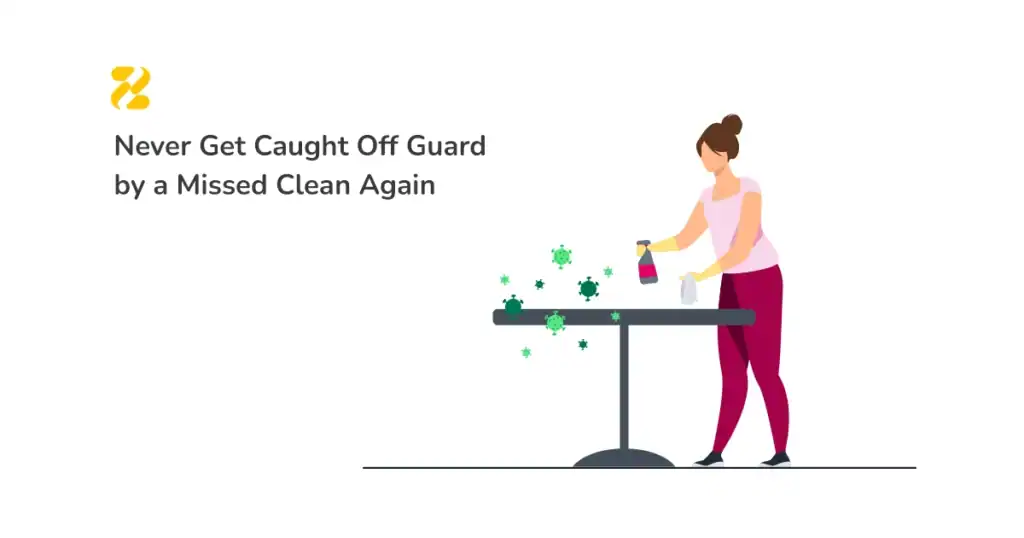
Real-time housekeeping tracking flags a clean the moment it’s at risk, not after a guest walks into a dirty property. Instead of finding out from a complaint, a property manager sees the task marked Late or Missed on the dashboard while there’s still time to fix it.
A missed clean rarely announces itself in advance. A cleaner runs late, a mid-stay clean gets skipped, a handover between two properties doesn’t leave enough time. On paper, everything looks fine because the task is technically assigned. The first anyone actually finds out is when a guest messages to say the room wasn’t ready, or wasn’t clean.
By then, there’s no way to fix it before check-in. The only options left are damage control: a rushed re-clean, a discount, an apology. Real-time housekeeping tracking exists to close that gap, so a property manager knows a clean is at risk while it’s still possible to act.
Table of Contents
Why Missed Cleans Are So Easy to Miss Until a Guest Complains
Most of the difficulty isn’t the cleaning itself, it’s coordination. A property manager with cleaners across several properties has to account for check-out and check-in times, how long each unit actually takes to clean, and the travel time between properties, often while assignments shift the same day.
Spreadsheets and calendars can hold a schedule, but they don’t tell you when something has slipped. A cleaner can be running behind without anyone noticing until the guest is already at the door. The visibility gap is the actual problem, not the cleaning.
What Real-Time Housekeeping Tracking Actually Looks Like
Housekeeping tasks are generated automatically for check-outs and for mid-stay cleans, spaced out across the length of a stay rather than left for the property manager to schedule manually. An allocation algorithm assigns each task by weighing a housekeeper’s availability, the check-out and check-in times involved, how long the clean typically takes, and the travel time to get there.
Allocation stays provisional up to a cut-off time the evening before, at which point housekeepers are notified of their assignment. A property manager can still manually reassign a task if something changes.
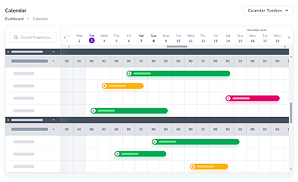
Each task carries a clear status, Late, Missed, Reopened, or Complete, so instead of assuming a clean happened, the dashboard shows exactly where it stands. Housekeepers clock in and out through the mobile app, which records their start time and location, and can be required to photograph each room before marking a task finished, so completion means the clean actually happened, not just that someone said it did.
What This Changes Day to Day
Instead of finding out about a problem from a guest, a property manager can see a task flagged as Late while there’s still time to call the housekeeper, reassign the job, or send someone else. A task marked Missed shows up on the dashboard rather than staying hidden until check-in.
For an operator running several properties at once, this is the difference between reacting to a complaint and catching the problem before the guest ever notices anything was wrong.

How Zeevou Handles Cleaning Management
Zeevou automates cleaning management end to end, whether cleaning is handled in-house or contracted out. Tasks are auto-generated for check-outs and mid-stay cleans, allocated by an algorithm that accounts for availability and travel time, and tracked in real time through the housekeeper’s mobile app, with photo verification and location capture on clock-in and clock-out.
See the full detail on the Cleaning Management feature page.
Frequently Asked Questions
Q1: What is real-time housekeeping tracking?
Real-time housekeeping tracking shows the live status of every cleaning task, including whether it’s on schedule, running late, or missed, rather than relying on a static calendar or spreadsheet that doesn’t update as things change.
Q2: How does housekeeping software flag a missed clean?
Each task carries a status such as Late, Missed, Reopened, or Complete, updating automatically as the scheduled finish time passes or a housekeeper clocks in and out, so a property manager can see the problem on the dashboard rather than finding out from a guest.
Q3: Can cleaning management software prevent guest complaints about cleanliness?
It reduces the risk by surfacing problems while there’s still time to act, reassigning a task or sending another cleaner before check-in, rather than only after a guest has already found the property unclean.
Q4: What is cleaning management software?
Cleaning management software automates the scheduling, assignment, and tracking of housekeeping tasks across one or more properties. That includes allocating cleaners based on availability and travel time, and recording task status in real time.
Conclusion
A missed clean is only a crisis if nobody sees it coming. Real-time housekeeping tracking turns a hidden risk into a visible one. Giving a property manager the chance to fix a problem before a guest ever has to raise it.
Zeevou’s Cleaning Management automates the scheduling and tracking behind this. Operators running multiple properties can catch a missed clean while there’s still time to do something about it.