Every host says the same thing: “I want more direct bookings.” Almost none of them have a repeatable system for actually getting there.
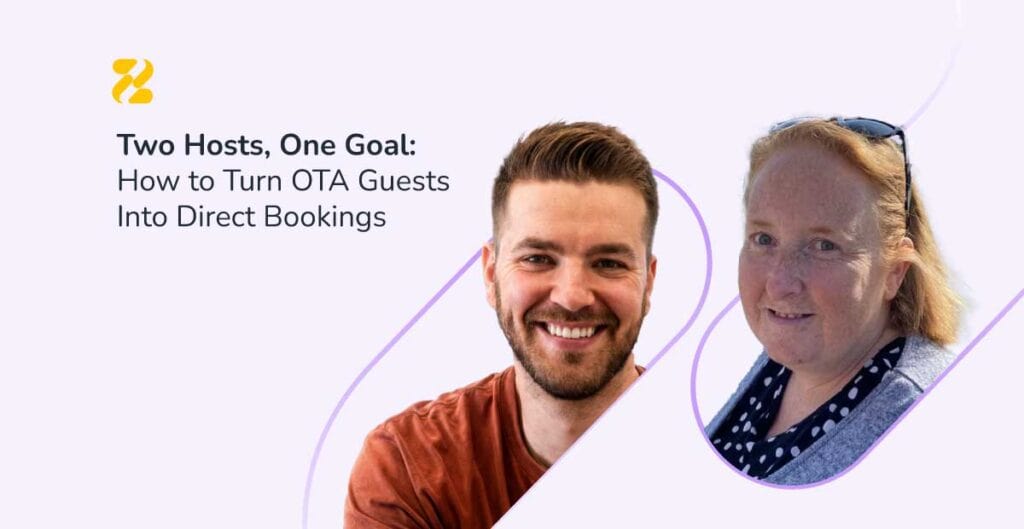
Two UK serviced accommodation operators, Joanne Simcock of Air Host & Clean in Liverpool and Fabian Prosciuc of FabAccommodation, recently compared notes on exactly that question at a Zeevou host gathering. Joanne’s business manages more than 60 properties in Liverpool, while Fabian operates across multiple cities through FabAccommodation, his guest-facing business, alongside EasierManagement, his property management company.
Their approaches aren’t complicated: niche SEO, consistent OTA branding, direct contact details, well-timed phone calls and targeted follow-ups, all designed to turn a one-off OTA stay into a relationship that can continue without the OTA.
Quick answer: The most effective approach is to make your company memorable during the stay, capture permitted direct contact details, and give guests a simple reason to return. In practice, that means branded listings, niche local SEO, personal follow-ups and targeted offers for valuable repeat guests.
Here’s how it breaks down.
Table of Contents
Why a DIY Website Usually Isn’t the Answer
Joanne’s first attempt at a direct booking website, years before she found Zeevou, cost her thousands of pounds and never made it live. Running two separate systems, one for the direct site, one for the OTAs, meant the calendars and prices kept falling out of sync, until she gave up on it entirely.
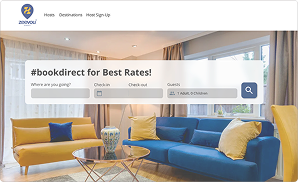
That experience shapes how she talks about direct booking today: the barrier was never demand, it was tooling. A direct booking website that syncs automatically with your calendar and pricing removes the biggest reason these projects stall:
- No developer needed to build or maintain it
- No manual syncing between two separate systems
- No risk of a booking landing on the wrong calendar at the wrong price
A website is also a sales tool, not just a booking page
Joanne uses her site for more than guest bookings. As a management company, she sends the link to prospective property owners alongside every quote, proof of the standard and quality guests can expect, and a quiet argument for why they should choose Air Host & Clean over a cheaper, lower-effort operator.
Rank for Searches You Can Actually Win
Fabian’s team invests seriously in SEO for FabAccommodation’s direct booking site, working with an agency in every city they operate in. The underlying principle doesn’t require an agency at all: don’t compete for “accommodation in Manchester.” Booking.com and Airbnb will win that keyword every time, no matter your budget.
Instead, Fabian’s approach is to:
- Target narrow search terms, typically 60 to 200 searches a month
- Build each term around a specific, local demand driver, such as “contractor accommodation near [hospital name],” or a phrase tied to a large local construction project
- Write blog content around one audience at a time, rather than the city as a whole
That last point is what earns first-page rankings – it isn’t competing with the giants for it.
Make Every OTA Listing Say “We’re a Company”
Both hosts land on the same conclusion from different angles: your OTA listings should still be working for your direct channel, even while a guest is booking through Airbnb or Booking.com.
- Joanne’s team signs every guest message and every review reply as a company, “the Air Host & Clean team” deliberately, repeatedly, so it eventually sinks in.
- Fabian’s team uses a consistent logo, company name, and a clear mention that longer stays come with a direct-booking discount, on every listing synced through Zeevou’s channel manager.
Both agree on the logic behind it: guests who are switched-on enough to compare prices are also switched-on enough to Google a company name once they’ve seen it a few times.
Get Direct Contact Details the Moment They Book
Joanne treats this as non-negotiable: always capture the guest’s direct email and phone number through your guest registration process, not just whatever contact method the OTA hands you.
Without it, every future touchpoint depends on the OTA’s inbox instead of your own:
- A check-in follow-up
- A returning-guest offer
- A simple “we’re here if you need us again”
Know Which Bookings Are Worth Chasing
Not every OTA booking is worth the effort of converting. Joanne’s rule of thumb: anything over ten nights and over £1,000 is worth pursuing directly. Below that, the guest is often booking with vouchers or points they can only use on the platform anyway, and chasing it isn’t worth the friction.
Don’t Get on the OTA’s Bad Side
This is where Joanne is most direct: don’t bite the hand that feeds you. OTAs spend heavily on marketing to bring you guests in the first place, and their algorithms are quietly watching how you behave.
- Cancellations get noticed. A high cancellation rate is a flag on your account.
- So does moving off-platform. Rates, phone numbers, or emails mentioned inside OTA messaging routinely trigger a warning, sometimes even when the intent was innocent.
- Reviews matter. A listing with no reviews, or reviews that only ever land in one month of the year, starts to look like a decoy listing rather than a real property, which undermines the very trust you’re trying to build.
The Phone Call Both Hosts Swear By
For all the automation either business runs, both hosts pointed to the same very manual habit as their best converter: picking up the phone.
Joanne’s Thursday and day-five calls
- Monday-to-Friday contractor bookings: her team calls on the Thursday before checkout, asking whether the guest is back in the area next week, and often discovering a bigger group, a longer project, or a booking that needs a different unit entirely.
- 28-night-plus bookings: the call happens around day five, once there’s a real sense of how long the stay will run.
Fabian’s early-stay call
Fabian’s team calls every new guest early in the stay to ask about the reason for their visit and how long they’ll be around. The value isn’t really the logistics, it’s the discovery that many guests don’t realise they’ve booked with a company at all. “They just think it’s another property on Airbnb,” as Fabian put it.
That call is often the first moment a guest learns there’s a whole portfolio, direct rates, and long-stay discounts behind the flat they booked.
Segment Your Offers Instead of Discounting Everyone the Same
FabAccommodation doesn’t send the same offer to every guest. Using booking-type filters inside its property management system, the team splits its audience into two groups:
- Business guests: discounts, cashback, and a referral scheme aimed at the lead guest, the actual decision-maker rather than a blanket offer.
- Leisure guests: seasonal promotions instead, timed around holidays or local events.
Automate the follow-through
Guest data exported from Zeevou’s reporting tools feeds into email tools like MailChimp, keeping a steady, low-effort drip of offers going out over time without anyone on the team actively managing it week to week.
Make Repeat Bookings Effortless
Both hosts run different versions of the same idea: once a guest has stayed once, make it as easy as possible for them to come back, and worth their while to send others.
Joanne’s guest-retention checklist
- One-time onboarding. Guests sign terms, share ID, and pay a deposit once – not every time they rebook.
- Properties set up for longer stays, not just short-stay units with a longer booking bolted on.
- A small welcome touch a note, a few extras for guests staying multiple nights in a row.
A safety net when you’re full
If Joanne’s team can’t accommodate a returning guest, they refer them to another operator through ZeeLink and still earn a commission, rather than losing them altogether.
A referral incentive
A voucher for any guest who sends a colleague their way, offered casually in conversation rather than as a formal ask.
Staying in touch after checkout
From a Christmas gift for a company’s biggest bookers to an automated reminder email sent every six months to past guests, the goal is simply to stay top of mind without any manual follow-up.
Fabian’s automated long-stay nudge
For any stay of 28 nights or more, FabAccommodation automates a pre-checkout email five days before departure, simply checking whether the guest needs to extend or needs additional accommodation, a small nudge that catches extensions that would otherwise depend on someone remembering to check the calendar.
What Both Hosts Stopped Doing
Experience taught both hosts as much about what not to do as what works.
Joanne’s team no longer:
- Cold-calls hotels or building sites for leads
- Prints flyers for van windscreens
- Shows up uninvited at work sites to talk to tradespeople on their break
- Drops rates below a set minimum just to win a large booking, however tempting the volume looks on paper
She describes the first three tactics as, at best, a waste of time and money, and at worst bordering on stalking.
Fabian, on the other hand, admits he used to dislike cold outreach just as much, FabAccommodation now does it anyway, but structured so the cost is tied to results: the person handling outreach is paid a commission on closed bookings only, rather than a flat rate for effort.
The Result: A Direct Booking Channel That Doesn’t Depend on Budget
None of these approaches is dramatic on its own. Together, they create a direct booking channel built around specific keywords, specific guest types, timely follow-ups and repeat relationships, rather than trying to outspend Airbnb or Booking.com for visibility.
OTAs still deliver on their side of the bargain, and cutting them off completely isn’t the goal. The goal is to make sure that, guest by guest, more of the relationship continues with your own business rather than ending with the OTA.
FAQ: Converting OTA Guests Into Direct Bookings
How do I convert an OTA guest into a repeat direct booker?
Capture their direct contact details at the point of booking, follow up personally (a call works better than an email), and make it obvious through branding, signatures, and your website, that they booked with a real company, not just a single listing.
Can I get a guest’s email from an Airbnb booking?
Don’t rely on the OTA to provide a guest’s direct contact details. The approach used by Air Host & Clean is to capture the guest’s email and phone number through the guest registration process, giving the operator a direct way to follow up rather than depending on the OTA inbox.
Do I need my own website to take direct bookings?
Not necessarily, but having your own direct booking website makes the process much easier. It gives guests somewhere to find your company, check availability and book without going through an OTA. For FabAccommodation and Air Host & Clean, the website is also part of how they build recognition beyond individual OTA listings.
Is it against OTA rules to encourage a direct booking?
Most OTAs prohibit discussing rates, phone numbers, or emails inside their messaging system, and monitor for it. The safer approach is building recognition and trust during the stay, then following up through your own channels once the guest has checked out.
Which OTA bookings are worth trying to convert to direct?
Longer, higher-value bookings tend to be worth the effort, many hosts use a simple threshold, such as stays over ten nights or over roughly £1,000, since shorter or voucher-funded bookings are less likely to move regardless of the incentive.
Should I offer the same discount to every guest type?
No. Business travellers tend to respond better to discounts, cashback, and referral incentives aimed at the person booking, while leisure guests respond better to seasonal or event-based offers. Segmenting by guest type converts better than one blanket promotion.